On-Page SEO Services to Optimize Every Element Google Actually Reads
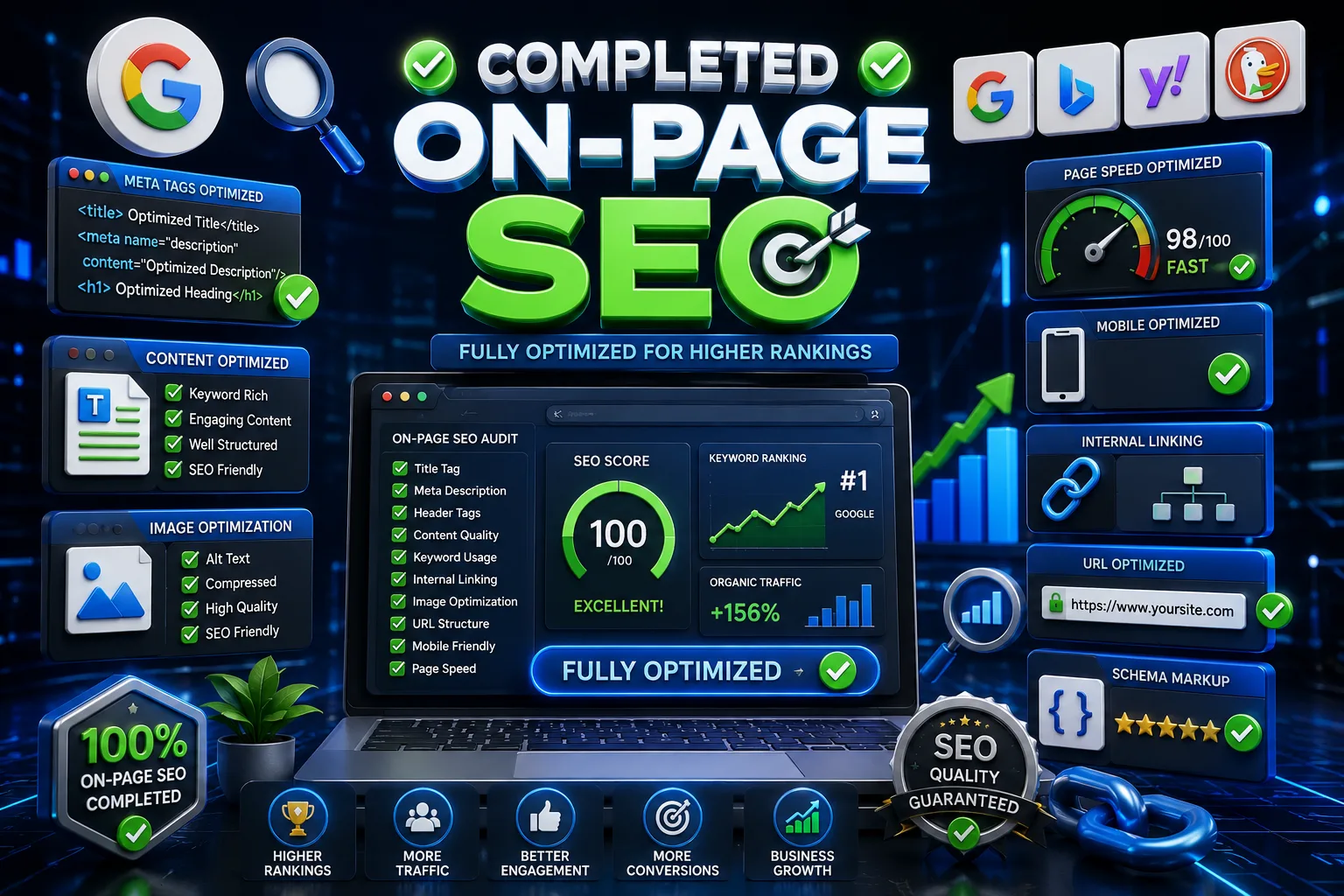
On-Page SEO Services to Optimize Every Element Google Actually Reads
Great content means nothing to Google if it isn’t structured, tagged, and optimized the right way. Proven SEO Agency’s On-Page SEO Services fix exactly that — we optimize every visible and technical element on your pages so search engines fully understand your content and rank it accordingly.
We serve businesses across the USA, UK, Canada, and Australia, combining classic Search Engine Optimization best practices with the newer demands of AI-driven search. This means your pages aren’t just optimized for Google’s crawler — they’re structured to be understood, summarized, and cited by AI answer engines too.
Pair this service with our Off-Page SEO Service for a complete ranking strategy, or explore our full SEO Services page.
What Is On-Page SEO?
On-page SEO is the process of optimizing individual web pages — content, HTML source code, images, internal links, headings, and meta data — to rank higher and earn more relevant traffic. Unlike off-page SEO, which builds authority through backlinks, on-page SEO ensures your website itself is fully aligned with what search engines and users are looking for.
This includes keyword placement, readability, header tag hierarchy (H1, H2, H3), URL structure, image alt text, schema markup, and internal linking — all the ranking factors Google’s algorithm evaluates directly on your page.
Why Choose Proven SEO Agency for On-Page SEO
- Keyword-Optimized Content Without Keyword Stuffing We use natural keyword placement that reads well for humans while still satisfying search algorithms.
- High-CTR Meta Titles & Descriptions Every meta title and description we write is built to increase click-through rate directly from the search results page.
- Proper Header Structure (H1, H2, H3) We organize content the way Google — and AI crawlers — prefer, improving both readability and topical clarity.
- Internal Linking Strategy We connect your pages strategically to spread authority and keep visitors engaged longer.
- Country-Specific Optimization Our on-page strategy is tailored for USA, UK, Canada, and Australia search intent and local search behavior differences.
H2: Benefits of On-Page SEO Services
- Higher click-through rates from search results
- Better keyword rankings for target search terms
- Improved user experience and lower bounce rate
- Clearer content structure for both users and AI search engines
- Stronger topical relevance signals to Google
- Faster indexing of new and updated pages
- Increased organic traffic without added ad spend
Why On-Page SEO Is Important for Your Business
On-page SEO is the foundation everything else builds on. You can have the best backlinks in the world, but if your page doesn’t clearly answer search intent, Google won’t rank it — and even if it does, visitors will bounce. A well-optimized page keeps users engaged, answers their questions, and guides them toward conversion.
On-page SEO also directly impacts how AI search tools summarize your business. Clean structure, clear headings, and well-organized FAQs make it far easier for AI engines to pull accurate information about your brand — which matters more every month as AI search adoption grows across the USA, UK, Canada, and Australia.
What’s Included in Our On-Page SEO Package
- Full on-page audit and keyword mapping
- SEO-optimized title tags and meta descriptions
- Header tag (H1-H3) restructuring
- Content optimization and keyword integration
- Image optimization and alt text
- Internal linking structure setup
- Schema markup implementation
- URL structure optimization
On-Page SEO FAQ
Q1: What’s the difference between on-page and off-page SEO? On-page SEO optimizes elements within your website, like content and meta tags, while off-page SEO builds authority externally through backlinks and mentions. Both are needed for full ranking potential.
Q2: How many keywords should I target per page? Typically one primary keyword and 2-4 closely related secondary keywords per page, integrated naturally throughout the content and headers.
Q3: Does on-page SEO help with AI search visibility? Yes. Clear structure, proper headings, and well-organized FAQ sections make it significantly easier for AI search and answer engines to extract and cite your content accurately.
Q4: How often should on-page SEO be updated? We recommend reviewing on-page elements every 3-6 months, or whenever there’s a significant Google algorithm update or shift in search intent for your keywords.
Q5: Can on-page SEO alone get me to page 1 of Google? On-page SEO significantly improves your chances, but competitive keywords usually require combining it with off-page SEO and technical SEO for the strongest results.
Want your pages fully optimized for both Google and AI search? Visit Proven SEO Agency to get started with a free on-page audit.